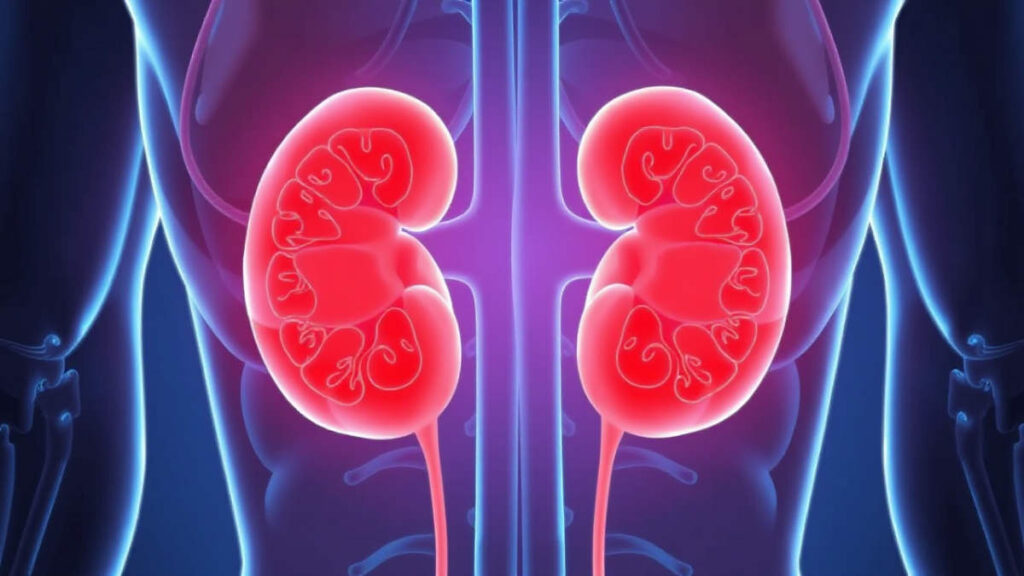
The kidneys filter waste products and excess fluid from the blood, regulate blood pressure, balance electrolytes such as sodium and potassium, and help produce red blood cells and activate vitamin D. Chronic kidney disease (CKD) is common — and in its early stages it usually causes no symptoms at all.
The most important thing to know
Early kidney disease is typically silent. Symptoms tend to appear only once kidney function is already significantly reduced [1]. This means you cannot rule kidney disease out by feeling well, and you cannot diagnose it from a symptom checklist. It is detected with a blood test (eGFR) and a urine test (ACR), which your GP can arrange.
This matters most if you have raised risk: high blood pressure, diabetes, cardiovascular disease, a family history of kidney disease, or if you are of South Asian or Black African or African-Caribbean background [2].
Signs that warrant a GP appointment
Swelling in the ankles, feet or hands
Reduced kidney function can cause sodium and fluid retention, producing swelling most often noticed in the ankles and feet [3]. Puffiness around the eyes, particularly in the morning, can reflect protein leaking into the urine.
Changes in your urine
Persistently foamy or frothy urine can indicate protein in the urine, an early marker of damage to the kidneys’ filters [3]. Needing to pass urine more often, especially at night, or blood in the urine, should also be checked. Blood in the urine always warrants a GP appointment, whatever you think the cause may be.
Muscle cramps
Cramping, often in the legs, can accompany the electrolyte disturbances that develop when kidney function declines [4].
Tiredness, poor appetite and breathlessness
As function declines further, fatigue, weakness, loss of appetite, difficulty concentrating and shortness of breath can develop [1].
Keep this in proportion
Every symptom above is far more commonly caused by something other than kidney disease. Ankle swelling is frequently down to heat, standing for long periods or medication; cramps usually have nothing to do with the kidneys; urinary frequency in men is often prostate-related. The point is not to self-diagnose from this list, but to get tested rather than wait — because early treatment can prevent progression, and by the time symptoms are obvious a good deal of function has already been lost [4].
References
- NHS inform. Chronic kidney disease.
- NHS. Chronic kidney disease.
- National Kidney Foundation. Signs and symptoms of kidney disease.
- Kidney Care UK. 10 signs you may have kidney disease.
This article is general information and is not medical advice. If you have any of the symptoms described, or you are in a higher-risk group, ask your GP for a kidney function test.